

From Adversaries to Allies: How Church Networks Evolved (And Why That Matters)
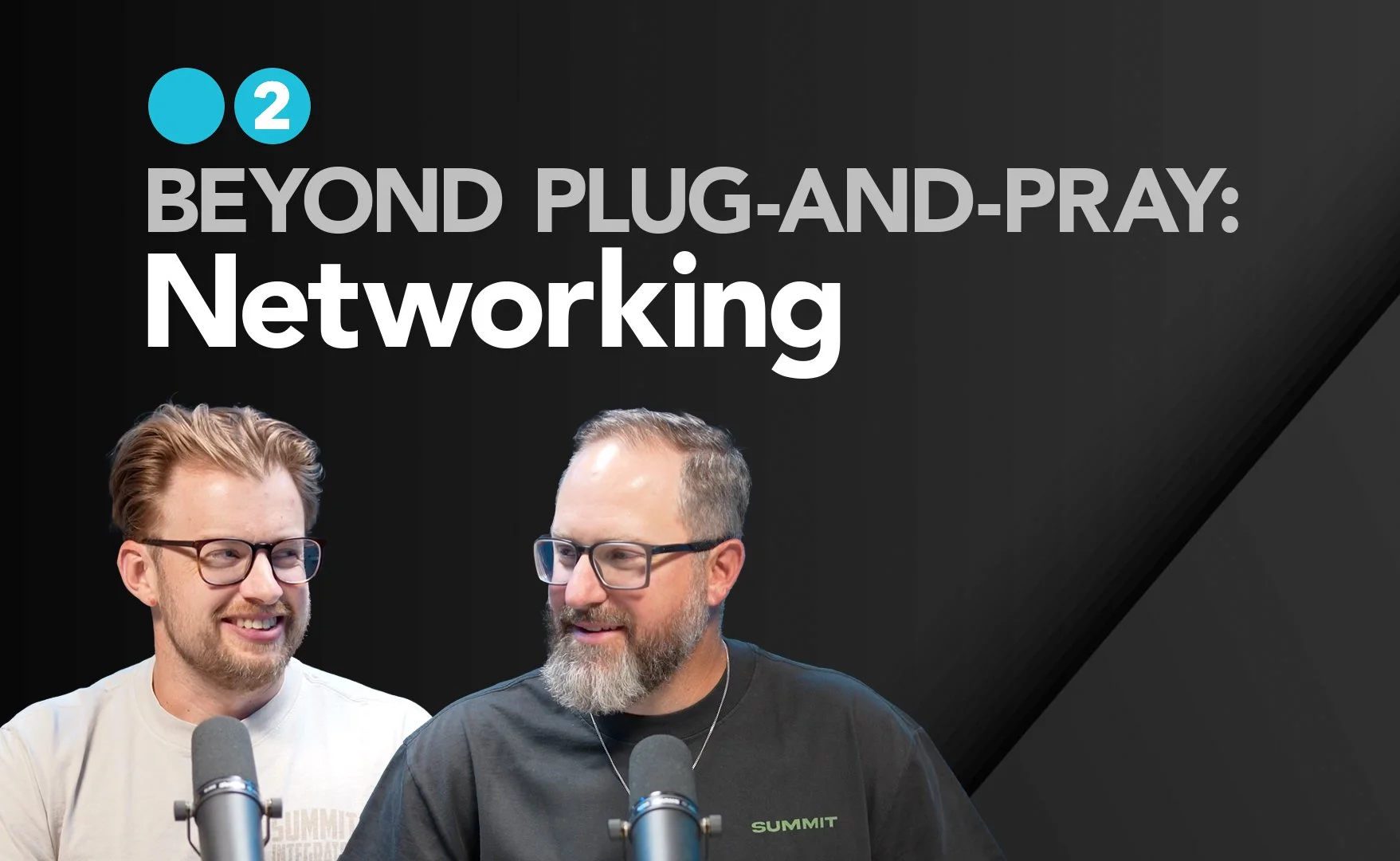
Remember when IT and AVL teams couldn't be in the same room without someone's metaphorical knuckles getting scraped? Those days are gone – and good riddance.
The Great Thaw
Matt Strong, one of our engineers who's lived through both sides of this story, put it perfectly: "The relationship has gone from adversarial – 'I do IT and you AVL nerds are gonna mess up my stuff' – to now, 'Hey, let's work together and make this great.'"
And honestly? It was about time.
See, back in the day, network implementation in churches was like watching two people try to parallel park the same car. The IT folks had their enterprise-grade Cisco switches and their perfectly managed VLANs. Meanwhile, the AVL team was over in the corner with their Dante-enabled audio console going, "Just... don't touch anything. We've got this weird SG 300 situation figured out."
Spoiler alert: Nobody had it figured out.
Everything Changed When Everything Went Digital
Here's what happened: analog died. Not gradually—it just packed up and left town. Suddenly, your 48-channel analog console became a relic, and everything – everything – needed the network.
Your audio? Network. Your video? Network. Your lighting control? Network. That KVM system moving your computer signals around? Definitely network.
As Matt noted, "Whether it's audio, video, lighting – everything touches the network now. It's unavoidable."
So we all had to get smart, fast.
The New Partnership Playbook
Today's successful church installations aren't about building walls between IT and AVL – they're about building bridges. We've found the sweet spot in what Matt calls "finding the compromise":
"Let me own what I need to own. You guys own what you need to own, and then we'll meet in the middle."
This isn't just diplomatic speak. It's practical wisdom born from projects where someone tried to own everything and nobody understood all of it.
What This Means for Your Church
If you're still living in the old world where your AVL team operates in complete isolation from your IT infrastructure, you're missing out on some serious advantages:
Better Resource Management: Instead of buying five different switches for five different systems, we're running integrated networks that handle Dante, KVM, lighting data, and regular internet traffic – all managed intelligently.
Smarter Growth Planning: When your IT and AVL teams collaborate from day one, you're not retrofitting solutions. You're building for where you want to be in three years, not just surviving today.
Actual Problem-Solving: When something goes sideways on a Sunday morning (and it will), having teams that understand each other's systems means faster fixes and fewer panic attacks.
The Bottom Line
The adversarial days weren't just unproductive – they were expensive. Churches were buying duplicate infrastructure, creating system conflicts, and burning bridges between teams that needed each other.
Now? We design networks that serve the whole mission. IT gets the reliability and control they need. AVL gets the performance and flexibility they require. And most importantly, the church gets systems that actually work together instead of fighting each other.
Because at the end of the day, we're all here for the same reason: making sure Sunday goes off without a hitch, and that the technology serves the bigger story being told.
The gear should follow the vision. And these days, thankfully, it finally can.
Need help bridging the gap between your IT and AVL systems? We've been navigating these waters for years. Let’s talk about what integrated excellence looks like for your church. And you can check out the full Gear Follows Vision podcast here.