

Three Kinds of Church Streaming (And Why Most Churches Pick the Wrong One)
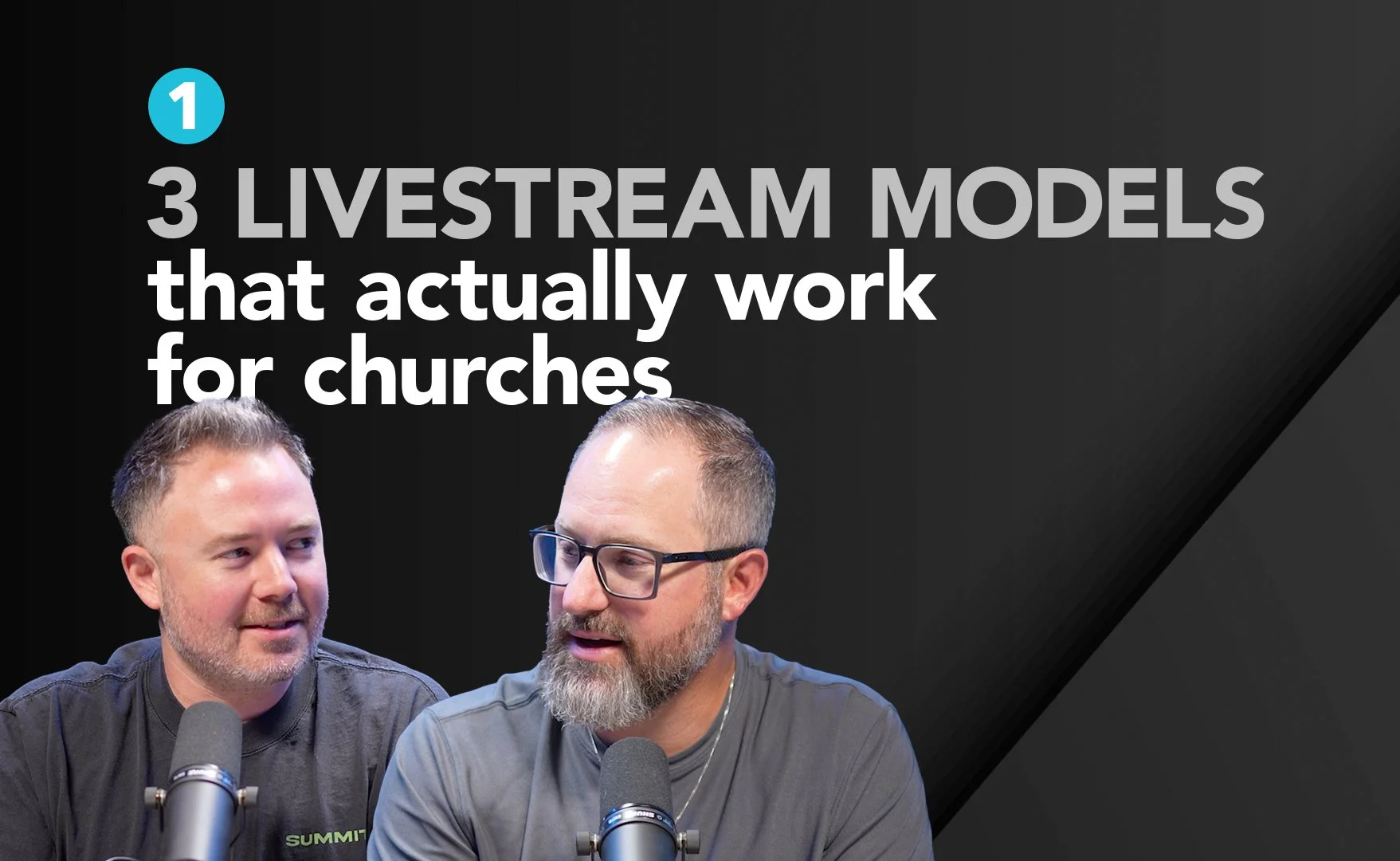
The difference between a front door, a back door, and a whole other building.
2020 taught us all something important: every church can stream. The question that's been haunting church leadership for the last five years is whether their church should keep streaming. And if they do, what exactly are they trying to accomplish?
Because here's the uncomfortable truth: most churches are spending money on streaming technology without having the faintest idea why.
The Great Streaming Identity Crisis
We've sat through countless meetings where church leadership says they want to "do streaming" with all the specificity of ordering "some food." The result? Production teams burning themselves out trying to create broadcast-quality content for an audience that doesn't exist, while the actual congregation wonders why Sunday morning suddenly requires a TV studio.
The solution isn't more cameras or better encoders. It's clarity.
Three Streaming Strategies, Three Different Budgets
After working with hundreds of churches on their streaming setups, we've identified three distinct approaches. Each serves a purpose. Each requires different technology. Each costs different money.
The Back Door ($)
This is streaming for your people who can't be there. Grandma with mobility issues. The family with a sick kid. The college student away at school who still wants to catch the pastor's series on Ephesians.
Technology needs: One camera in the back of the room. Audio feed from your console. Maybe an iPhone if you're feeling fancy. A basic streaming encoder. YouTube account. Done.
Budget: Under $2,000 for most churches.
Philosophy: "Here's what happened in our room today. We're glad you could join us virtually."
The Front Door ($$)
This is streaming as marketing. You want visitors to experience your church before they visit your church. You're giving them a taste of what Sunday morning feels like, hoping they'll decide to join you in person.
Technology needs: Multiple camera angles. Decent production value. Clean audio mix. Reliable streaming platform (Resi is our go-to). Maybe some graphics or lower thirds.
Budget: $5,000-$15,000, depending on how polished you want to get.
Philosophy: "This is who we are. This is what we're about. Come be part of it."
The Online Campus ($$$)
This is streaming as a separate ministry. You're not just broadcasting your in-person service; you're creating content specifically for online consumption. You have an online pastor. Online small groups. Online next steps.
Technology needs: Dedicated broadcast mixing console. Multiple camera setups optimized for online viewing. Separate audio mix. Possibly separate hosting moments. Graphics package. The works.
Budget: $25,000 and up, plus ongoing staffing costs.
Philosophy: "We're creating a digital church experience that stands on its own."
The Vision Question
Here's how you know which category you're in: look at your next steps.
If all your next steps point people toward in-person involvement, you're probably Front Door.
If you barely have next steps for your online audience, you're probably Back Door.
If your next steps are specifically designed for digital engagement, you're Online Campus territory.
Most churches operate in the space between Back Door and Front Door. Very few actually need a full Online Campus setup, despite what their production teams might think.
The Overworked vs. Overworking Problem
There is a difference between being overworked and overworking.
Overworked means leadership has given you more tasks than you can reasonably handle. That's a capacity and resource problem.
Overworking means you've taken it upon yourself to create a vision that leadership never asked for. That's a clarity problem.
If your senior pastor wants a Back Door stream but you're killing yourself trying to produce Front Door quality content, you're not overworked. You're overworking.
The Technology Trap
Here's where churches get sideways: they let their production dreams drive their technology decisions instead of letting their ministry vision drive them.
We've seen churches spend $30,000 on streaming equipment for a Back Door strategy. We've also seen churches try to execute a Front Door strategy with Back Door gear and wonder why no one's watching.
The gear doesn't define the strategy. The strategy defines the gear.
Making the Right Choice
Most churches should start with Back Door and work their way up. It's cost-effective, low-pressure, and serves your existing congregation well. If that creates momentum and you start seeing new visitors because of your stream, then you can consider investing in Front Door-level production.
Very few churches need to jump straight to Online Campus. And that's perfectly fine.
Because here's what we've learned: the best streaming strategy is the one that aligns with your actual ministry goals, serves your real audience, and executes consistently every single weekend.
Everything else is just expensive theater.
The Sunday Morning Test
Want to know if your streaming strategy is working? Ask yourself this: when your production team doesn't show up on Sunday, what breaks?
If your in-person service is fine but your stream suffers, you've got the balance right. If your in-person service suffers because you're trying to manage broadcast production, it might be time to reassess.
Because at the end of the day, streaming should serve your ministry, not the other way around.
Ready to figure out your streaming strategy? We've helped hundreds of churches find the sweet spot between their vision and their budget. Because the right approach isn't about what everyone else is doing – it's about what works for your church. We’d love to help.
If this sparked ideas, check out the full Gear Follows Vision podcast here.